Whether you’re looking for expert advice on decorating or setting up a new room in your home, you have no doubt heard of all sorts of wall repair ideas. Hiring Drywall Installation Services In Vaughan experts at FixOnto has been one of the most common questions we receive from homeowners throughout Vaughan. If homeowners throughout Vaughan have any questions about the process when hiring someone to do drywall installation, then it is how they’ll know what to expect. Fortunately, the process is not complicated to understand if you understand the basics of the materials used.
Let’s walk through it so you understand each of the tools we use to do drywall and the reason why they are useful and why you should care.
Drywall Sheets, the Cornerstone of any Project
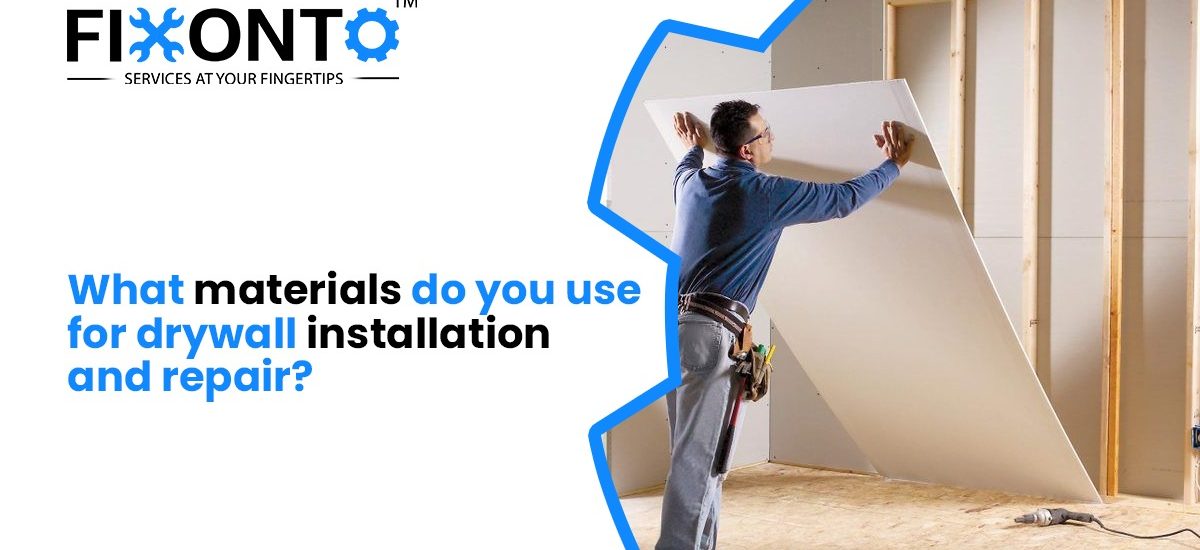
The most apparent material is the drywall panel. They offer varying thicknesses (typically ranging between 3/8” and 5/8”), depending on the location of installation. For instance, thicker sheets can be used for ceiling applications or around doors/circles where additional fire resistance is desired, and thinner sheets can be used for regular interior wall applications. When installing drywall in a bathroom, our team considers the need for moisture-resistant drywall panels, while when our team is called to install it in a basement, it will be more durable.
Joint Compound and Tape
With the panels installed, the gaps should be covered between the panels. This is where the joint compound or “mud” comes into play. It is applied on paper or mesh tape, which is placed along each seam, corner, and screw hole. Several light passes are repeated, and sanded in between after each pass, for a smooth and seamless surface. This is the key element that makes the difference between a pro-type wall and a DIY one — and this is what we do for our Drywall Installation Services Near Me.
Screws and Fasteners
One would think that drywall stands alone. These are attached with drywall screws, which are specially designed screws that pierce the drywall without tearing through the paper. These types of screws are carefully positioned to ensure that the panels remain strong and stable over time. It is a common error to use the wrong fasteners, but it can cause the walls to loosen or bulge in the future – that’s why all of our Vaughan crews only use the recommended spacing and type of screws.
Use Corner Beads on Clean Edges.
Each wall possesses corners, and corners must be protected. Metal or durable plastic corner beads are applied to outside corners before a mudding operation has started. They maintain straight edges and do not chip or damage over the years. It’s a minor component, but it does make a big difference in the longevity of the repair work on a wall, or in this case, the floor.
Prime and Sanding materials
In addition to the look of a new drywall installation, the patches should be a color match or simply primed before any paint is applied. This will make the surface more stable and provide an even area to paint over, particularly if patching was used on the area that needs to be painted. Other items included in the process are sandpaper and sanding sponges, again to smooth out compound layers so the wall is perfectly flat to touch.
Insulation and Vapor Barriers (If applicable)
In some drywall installation tasks, such as new construction or a major remodel, behind-the-finish-drywall projects require insulation and vapor barriers prior to installing the wall beneath. This will contribute to good energy efficiency and moisture control, critical in a country with cold winters and humid summers like Vaughan. This procedure always has to be questioned prior to beginning any job by our team.
The use of the right materials is essential for your project
Quality materials are not only about doing quality work once, but it’s also about assuring stuff lasts! Poorly matched screws or failure to use the appropriate compound prior to gluing, or omitting the primer, may cause cracks, bulges, and/or a need for re-repair within a year or two. That’s why, every time FixOnto takes on a drywall installation job or a repair job, we use trusted and tested materials.
How many days does it usually take to repair drywall?
The average time required for the completion of most small drywall repairs is a few hours, and the average time required for completing the installation of drywall in a room is two days, depending on the size of the room and the drying time of compound layers. When working with drywall installation, Vaughan customers can always rest assured there will be no surprises once the work actually begins, with a clear timeline of workup in advance.
Get Reliable Drywall Installation in Vaughan
Having the right materials can be the difference between a patching job and a completely renovated space – even if it’s a small space. When you’re searching for reliable Drywall Installation Services In Vaughan, FixOnto is at the rescue. Don’t hesitate to call us today, and we will help restore your walls to their former glory.